
How Do We Deal With Pain(Killer)
It All Begins Here
Open your medicine cabinet and the lineup feels eternal, like it was always there: a white bottle of Tylenol, the rust-colored Advil tablets, and Aleve, maybe a forgotten bottle of something with codeine from a dental visit. We reach for them without a second thought. Headache, ibuprofen. Fever, Tylenol. Bad back, whatever's closest. Period pain - Aleve (apparently not many people know this).
But none of these molecules fell out of the sky, and almost none of them arrived the way you'd expect. The story of how we got here is a mix of bark-chewing folk medicine. It's worth walking through, because the cabinet makes a lot more sense once you know how each thing got in there.
It starts with a tree
The oldest thread runs through willow bark. People had been chewing it and brewing it into bitter teas for fever and aches for a very long time. There are references scattered through ancient Egyptian, Greek, and Sumerian medicine. Hippocrates is supposed to have recommended it. Nobody knew why it worked, only that it sort of did.
The "why" started to come apart in the early 1800s, when chemists got good enough to pull individual compounds out of plants. They isolated the active ingredient and called it salicin, after Salix, the Latin name for willow. From salicin you could get salicylic acid, which turned out to be a genuinely effective fever-reducer and pain-reliever. There was just one problem: it's brutal on your stomach. It tastes terrible and it tears up your gut lining. Useful, but not something you'd want to take regularly.
The fix came at Bayer in 1897, when a young chemist named Felix Hoffmann tweaked the molecule by adding an acetyl group to make acetylsalicylic acid. It kept the benefits and was gentler on the stomach. Bayer marketed it starting in 1899 under a name they coined from the chemistry and the plant it had originally come from (the Spiraea shrub is another natural source): Aspirin.
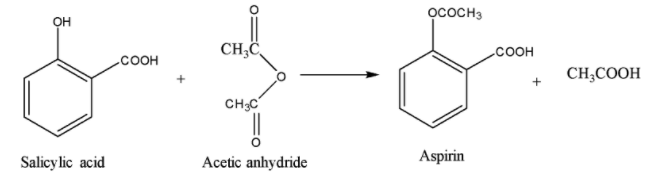
So the world's first blockbuster painkiller was, essentially, a chemically domesticated version of a folk remedy that was thousands of years old. That sets the pattern for a lot of what follows: the effect comes first, the explanation comes much, much later.
The mystery underneath all of it
Here's the strange part. For most of the twentieth century, aspirin was one of the most widely consumed drugs on earth, and nobody actually knew how it worked. It relieved pain, reduced fever, and brought down inflammation, and the mechanism was a complete black box.
That box finally opened in 1971 when a British pharmacologist named John Vane showed that aspirin works by blocking the production of prostaglandins. I know the name sounds confusing and seems like it is from prostate (well our scientists thought so at first, but then was proven wrong). It is a family of signaling molecules your body makes at sites of injury and infection. Prostaglandins are what crank up inflammation, sensitize your nerve endings so things hurt more, and tell your brain to raise your body temperature. Aspirin shuts down the enzyme that makes them, an enzyme later named cyclooxygenase, or COX.
This was a genuinely big deal, and Vane shared a Nobel Prize for it in 1982. It didn't just explain aspirin — it explained an entire category of drugs. Anything that blocks COX and damps down prostaglandins would relieve pain, fever, and inflammation through the same fundamental route. We now call this whole class NSAIDs: non-steroidal anti-inflammatory drugs. Aspirin, ibuprofen, and naproxen are all members of the same family. They're cousins, and Vane is the one who drew the family tree.
It also explained the side effects. Prostaglandins don't only drive inflammation; they also protect your stomach lining and help your kidneys and platelets work normally. Block them everywhere and you get the upset stomach, the bleeding risk, the kidney strain. The benefit and the cost come from the exact same switch. Hold that thought, because it becomes the whole drama later.
Ibuprofen and the famous hangover
By the 1950s, the search was on for an anti-inflammatory that could match aspirin without wrecking people's stomachs.
At Boots, the British pharmacy company, a chemist named Stewart Adams led a team grinding through hundreds of candidate compounds across the 1950s and 60s. Most failed. The one that worked, eventually patented in the early 1960s, was ibuprofen.
The detail everyone loves about this story is true: before the first clinical trials, Adams reportedly tested an early dose on himself to settle a hangover headache before a speaking engagement. It worked. Ibuprofen reached the UK market as a prescription drug in 1969, went over-the-counter there in the 1980s, and arrived in the US as Advil and Motrin. It became one of the best-selling drugs in history, and Adams kept taking it for his own aches well into old age.
Ibuprofen is the workhorse NSAID. It's fast, it's cheap, it hits pain, fever, and inflammation, and it's gentler than aspirin. Its main downside is that it doesn't last very long — you're re-dosing every four to six hours.
Naproxen, the slow burn
Which is exactly the gap naproxen filled. Developed at the pharmaceutical company Syntex and approved in the US in the 1970s, naproxen is chemically similar to ibuprofen but sticks around in the body much longer. One dose can cover eight to twelve hours, which is why it became the go-to for things like menstrual cramps, arthritis, and lingering muscle pain where you don't want to be popping a pill every few hours.
It spent years as a prescription drug before going over-the-counter in the US in the 1990s as Aleve. Same family, same COX-blocking mechanism, just tuned for endurance rather than speed. If ibuprofen is a sprinter, naproxen is the long-distance one.
Tylenol, the odd one out
Now for the strange member of the cabinet. Acetaminophen — called paracetamol outside the US, sold as Tylenol — looks like it belongs with the others, but it doesn't really fit.
Its history is a comedy of near-misses. The molecule was first synthesized back in the 1870s and then essentially ignored for decades. In the meantime, related compounds like acetanilide and phenacetin were used as fever-reducers, even though they had nasty side effects. It wasn't until the 1940s that researchers worked out that acetaminophen was actually the useful active breakdown product hiding inside those older, dirtier drugs — the good part of the molecule had been there all along, just bundled with the bad parts. McNeil Laboratories launched it as Tylenol in the US in the mid-1950s.
Here's what makes it odd: acetaminophen relieves pain and reduces fever, but it does almost nothing for inflammation. It's not really an NSAID. And — true to the running theme — we still don't fully understand how it works. The leading ideas involve it acting more in the central nervous system than out at the site of injury, but the mechanism remains genuinely fuzzy decades after it became a household name.
The practical upshot is what matters for your cabinet: because it skips the COX-everywhere route, acetaminophen is easy on the stomach and safe for people who can't take NSAIDs. But it has a different, sharper danger — it's processed by the liver, and overdose causes severe, sometimes fatal liver damage. The gap between a normal dose and a harmful one is narrower than people assume, especially because acetaminophen is quietly mixed into so many combination cold and flu products. It's the most common cause of acute liver failure in much of the world. A safe, gentle drug with a hard ceiling you really don't want to cross.
The COX-2 detour, and a cautionary tale
By the 1990s, scientists had refined Vane's picture. It turned out there isn't one cyclooxygenase but (at least) two: COX-1, which handles the everyday housekeeping like protecting your stomach lining, and COX-2, which is the one that ramps up during inflammation. The old NSAIDs block both, which is why they fight inflammation and upset your stomach.
The obvious idea: build a drug that blocks only COX-2. You'd get the pain and inflammation relief without the gut damage. This produced a new class called COX-2 inhibitors, with Celebrex and Vioxx launching to enormous fanfare at the end of the 1990s.
For a while it looked like a clean win. Then the bill came due. By 2004, evidence had piled up that Vioxx significantly raised the risk of heart attacks and strokes, and its maker pulled it from the market in one of the largest drug withdrawals ever — it had been taken by tens of millions of people. The selectivity that protected the stomach had, it turned out, tilted the body's chemistry in a way that strained the cardiovascular system. It's a sobering reminder of the lesson from the very beginning: these molecules pull on a system with many connected strings, and you rarely get to tug just one.
The other ladder: opioids
Everything above tops out somewhere. NSAIDs and acetaminophen are great for everyday pain, but they hit a ceiling — past a certain dose they don't get more effective, they just get more dangerous. For severe pain, surgery, cancer, major trauma, medicine reaches for an entirely different and much older class: the opioids.
This thread also starts with a plant: the opium poppy, used for pain and sleep for thousands of years. The modern era began around 1804–1817, when a German pharmacist named Friedrich Sertürner isolated the main active compound from opium and named it morphine, after Morpheus, the Greek god of dreams. It was the first time anyone had pulled a pure, potent drug out of a plant — arguably the birth of medicinal chemistry itself. Codeine, a milder relative, was isolated soon after.
From there, chemists kept modifying the morphine skeleton. Some of those modifications produced semi-synthetic opioids like oxycodone and hydrocodone. One of them, produced at Bayer in the 1890s and marketed as a supposedly safer cough and pain remedy, was heroin — a cautionary tale that arrived almost immediately. Later came fully synthetic opioids built from scratch, including methadone and, in 1960, fentanyl, developed by the Belgian chemist Paul Janssen. Fentanyl is roughly a hundred times more potent than morphine, which makes it invaluable in surgery and devastating on the street.
Opioids work on a completely different system than the NSAIDs. Instead of blocking inflammation out in the tissues, they bind to opioid receptors in the brain and spinal cord, dulling the perception of pain and producing a sense of calm or euphoria. That euphoria, and the body's tendency to adapt and demand more, is the source of their addictive power. The same receptors that switch off agony are the ones that drive dependence — once again, the benefit and the danger are wired into the same mechanism. The opioid epidemic of the last few decades is the catastrophic version of that trade-off playing out across whole societies.
How doctors actually climb between these
If you've ever wondered why a doctor gives you ibuprofen for one thing and something much stronger for another, there's a rough framework behind it, originally drawn up by the World Health Organization for cancer pain and now used more broadly as a mental model: the analgesic ladder.
The bottom rung is the non-opioids — acetaminophen and NSAIDs — for mild pain. If that isn't enough, you add a mild opioid like codeine. If that isn't enough, you move to strong opioids like morphine or fentanyl, often still combined with the non-opioids on the bottom rung, because they work through different mechanisms and stack well together. The whole point is to start as low as possible and climb only as far as you have to, since every step up the ladder buys more relief at the cost of more risk.
The hole in the middle, and what's finally filling it
Lay it all out and a problem jumps out. At the bottom you have safe-ish drugs that cap out at moderate pain. At the top you have powerful drugs that work but carry the constant shadow of addiction. For decades there was very little in between — no strong, non-addictive option for serious acute pain. If you broke a bone or had surgery, the honest choice was often "manageable relief from an NSAID" or "real relief from something you could get hooked on."
This is where things have actually started to move. In January 2025, the FDA approved suzetrigine, sold as Journavx, from Vertex Pharmaceuticals — notable for being the first genuinely new class of pain medicine approved in more than two decades. Instead of blocking inflammation or acting on the brain, it works on a third route entirely: it selectively blocks a sodium channel called NaV1.8 that sits on the pain-sensing nerves out in the body and helps fire pain signals toward the brain. Because it acts in the peripheral nervous system and not in the brain itself, it relieves moderate-to-severe acute pain without the addictive potential of opioids.
It isn't a miracle — early studies suggest it works well for some kinds of pain and not others, and it's expensive and new — but it's a real proof of concept for a long-held dream: turning down pain at the source, in the wiring of the nerves themselves, without the costs that have defined every option above it. After two centuries of mostly refining the same two ancient ideas — block inflammation like willow bark, or quiet the brain like the poppy — that's a genuinely new direction.
The throughline
Step back and the cabinet tells a coherent story. Two ancient plants, willow and poppy, gave us the two great strategies for fighting pain. Chemists spent two hundred years purifying, tweaking, and tuning those molecules — faster, slower, gentler, stronger — usually long before anyone understood the mechanism underneath. Every advance came braided with a trade-off, because pain is woven into systems that do other necessary jobs, and you can almost never touch one without touching the others.
So the next time you shake two tablets out of a bottle for a headache, it's worth a small moment of appreciation. You're holding the end product of bark-chewing healers, a hungover chemist, a Nobel-winning insight, an industry's worst mistake, and a very long search for a way to stop pain without paying too much for it — a search that, after all this time, is still genuinely underway.